Vision Therapy
Targeted Treatment for Persistent Visual Conditions


Targeted Treatment for Persistent Visual Conditions
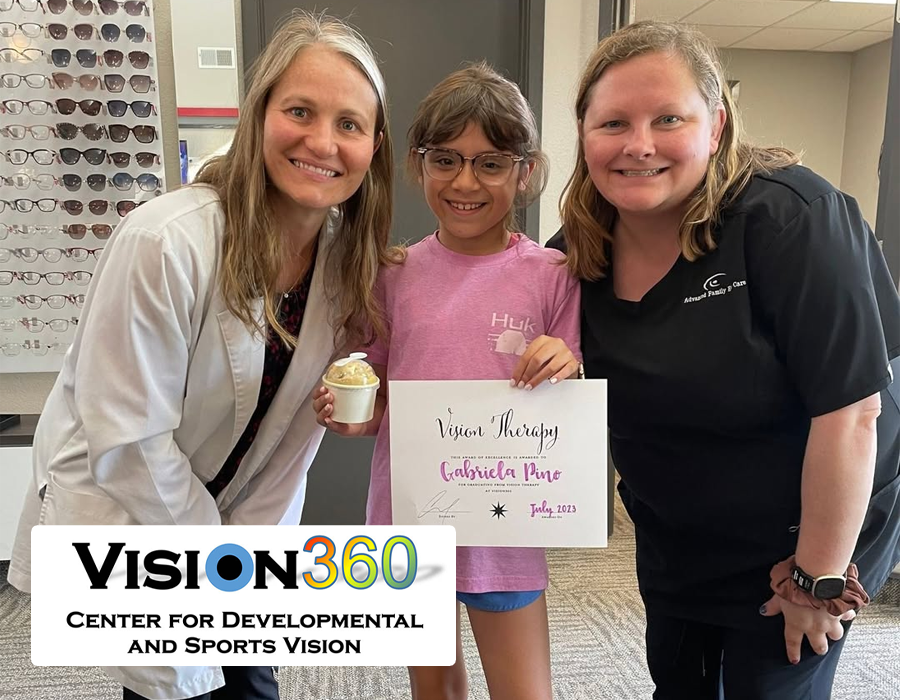
Advanced Family Eye Care provides personalized vision therapy in Cedar Falls and Independence, helping children and adults throughout the Cedar Valley strengthen visual skills and improve how their eyes and brain work together.
Vision Therapy is a non-surgical program of personalized exercises designed to improve the connection between the eyes and the brain. At Advanced Family Eye Care, our therapy programs effectively treat persistent visual conditions like lazy eye, crossed eyes, and convergence insufficiency that glasses alone cannot correct.
This specialized treatment is also used to address vision problems that interfere with learning, reading, and recovering from a concussion. By following our structured plan of in-office and at-home exercises, patients develop stronger visual skills, leading to improved focus, reduced eye strain, and better performance in school and daily activities.
Recognized throughout the Cedar Valley for the Vision 360 program developed by Dr. Carrie Kearns, our process is rooted in compassion, precision, and a deep commitment to each patient’s success. Patients begin with a comprehensive evaluation, followed by weekly in-office sessions and daily at-home exercises—all tailored to their unique needs and monitored closely to ensure lasting progress.
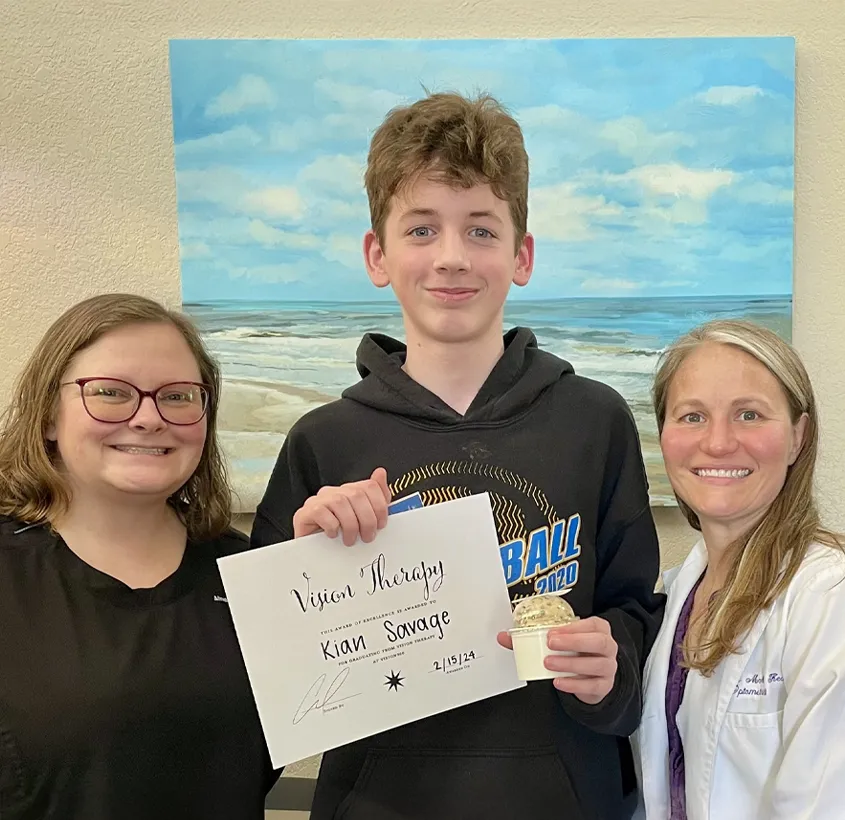



“Congratulations Lilly! So excited to see her graduate and celebrate her hard work! She is a big Iowa Women’s Basketball fan!”
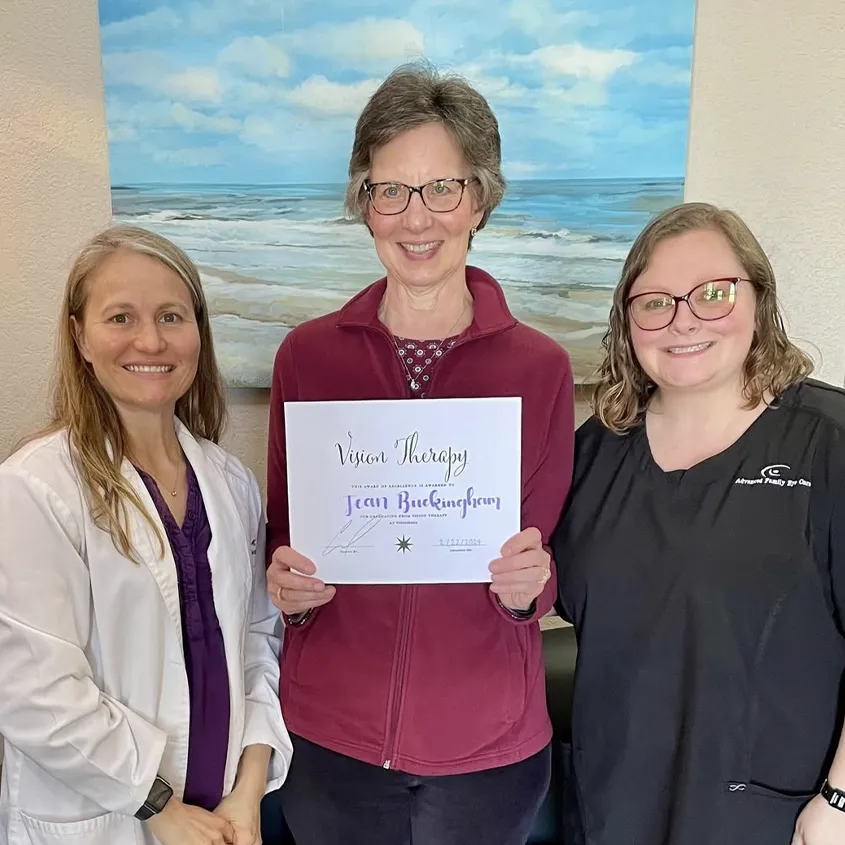
“Jean was a joy to work with and was extremely self-motivated. She was able to expand her visual field and thoroughly enjoyed seeing all the bald eagles that now fill her sky!
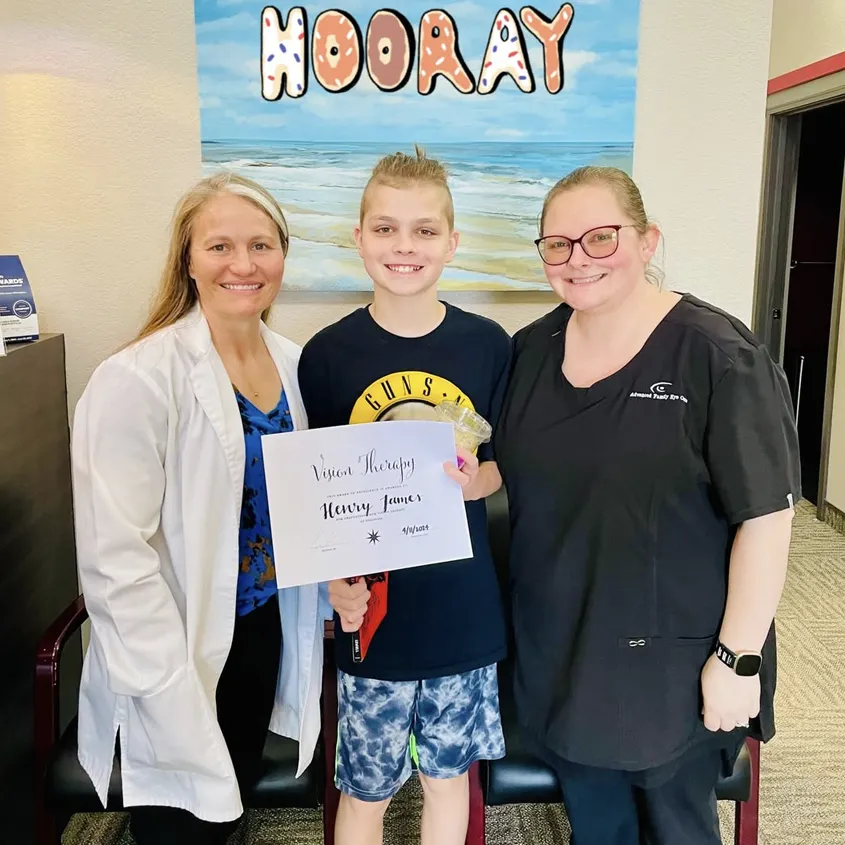
“Another amazing graduate from Vision Therapy! Henry you were awesome and worked so hard! Congratulations!”
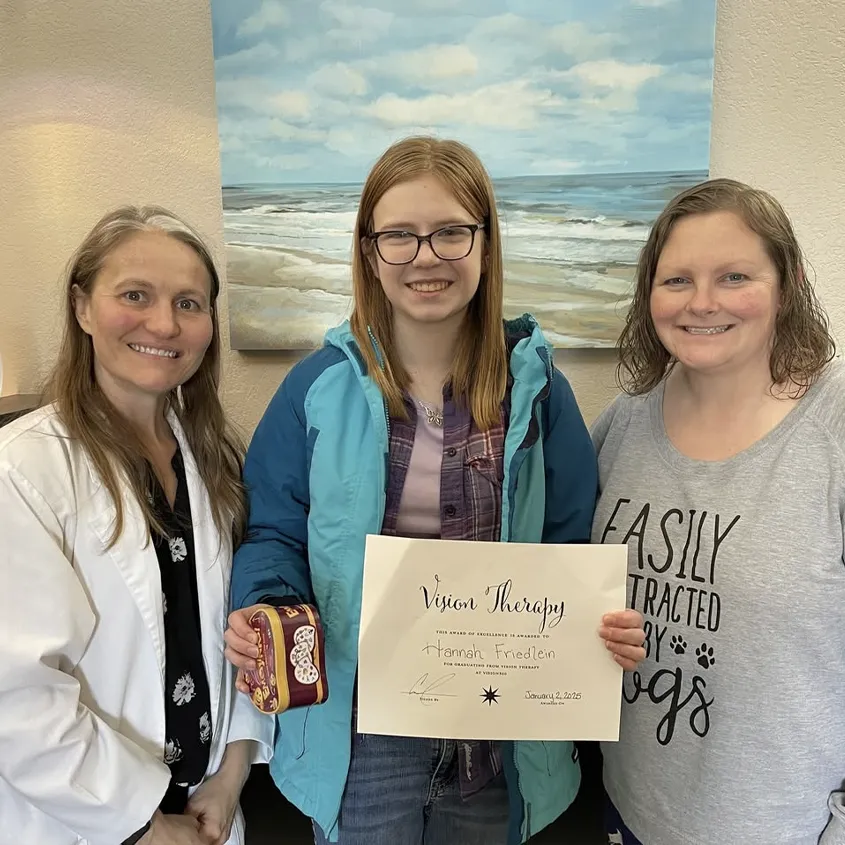
“Hannah was such a joy to work with! Congratulations Hannah on your graduation from Vision Therapy!”


Leading eye care services in the Cedar Valley since 1979.
Hours:
Monday: 9 AM–5 PM
Tuesday: 8 AM–5 PM
Wednesday: 8 AM–5 PM
Thursday: 8 AM–5 PM
Friday: 8 AM–3 PM
Hours:
Monday: 9 AM–5 PM
Tuesday: 8 AM–5 PM
Wednesday: 8 AM–5 PM
Thursday: 8 AM–5 PM
Friday: 8 AM–3 PM
© Copyright 2026, Advanced Family Eye Care. All Rights Reserved. Privacy Policy | Terms


